Jul 22, 2026

Agricultural Drone Licence Requirements in Australia: A Guide to Operating the XAG P150 Max

Home
/
Blog
/
,
Operation Guides

Agricultural drones are rapidly transforming Australian farming—handling everything from heavy-duty spraying and spreading to mapping and on-farm transport. But before you can put one to work in the paddock, you need to sort out the compliance side. Operators must meet specific aviation regulations set by CASA, alongside state and territory chemical-use rules when applying regulated products.

Because drone licensing requirements scale with the weight of the aircraft and how you intend to use it, the paperwork can sometimes feel overwhelming. This guide breaks down the exact rules for medium remotely piloted aircraft, using the high-capacity XAG P150 Max as a practical case study to help both farm owners and commercial contractors navigate their certification pathways.


Why does the P150 Max require aircraft-specific training?

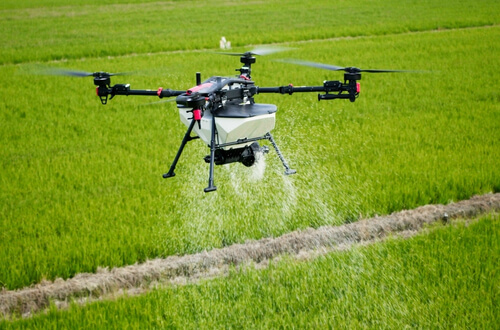
XAG P150 Max agricultural drone spraying crops in a green paddock

The Civil Aviation Safety Authority, or CASA, regulates drone operations throughout Australia.

With a maximum take-off weight above 25 kg, the P150 Max falls within CASA’s medium remotely piloted aircraft (RPA) category, which covers aircraft weighing more than 25 kg but not more than 150 kg. CASA treats drones over 25 kg as individual aircraft qualifications. This means the pilot needs an appropriate Remote Pilot Licence (RePL) that lists the P150 Max and its maximum take-off weight.

If you already hold a RePL for a smaller multirotor drone, you may need to complete additional aircraft-specific training before operating the P150 Max.


Farm Owners vs. Agricultural Contractors

The main difference is whether the operation qualifies for CASA’s landholder excluded category.

Comparison of P150 Max requirements for farm owners and agricultural contractors
Requirement Farm owner (own or leased land, no payment) Agricultural contractor
Appropriate Remote Pilot Licence (RePL) listing the P150 Max Required Required
Aircraft-specific training May be required, depending on existing qualifications May be required, depending on existing qualifications
Remotely Piloted Aircraft Operator’s Certificate (ReOC) Generally not required if all landholder excluded-category conditions are met Generally required
CASA drone registration Required Required
Chemical application qualifications State or territory requirements apply when spraying regulated chemicals State or territory pilot and business requirements generally apply
Aeronautical Radio Operator Certificate (AROC) Required only when transmitting on aeronautical radio frequencies Required only when transmitting on aeronautical radio frequencies
XAG manufacturer training Strongly recommended Strongly recommended
Operational records and compliance Required Required
Appropriate insurance Strongly recommended Strongly recommended and commonly expected commercially

Requirements for farm owners

A farm owner may be able to operate the P150 Max without a Remotely Piloted Aircraft Operator’s Certificate, or ReOC, under CASA’s landholder excluded category.

To use this pathway, all applicable conditions mustbe met. In general:

  • The drone must be operated over land owned orleased by the drone owner.
  • The pilotmust be the drone owner or someone operating it on the owner’s behalf.
  • The workmust involve an eligible activity, such as agricultural spraying, fertiliserapplication, seed spreading, mapping or carrying cargo.
  • Neither thedrone owner nor the landowner or leaseholder can receive direct payment orcompensation for the drone operation.
  • The pilotmust hold an appropriate RePL for the P150 Max.
  • The dronemust be registered with CASA.
  • CASA’sstandard operating conditions must be followed.
  • The requiredoperational records must be maintained.

The landholder pathway removes the need for a ReOC when all conditions are met, but it does not remove the RePL, drone registration or operational compliance requirements.

Requirements for agricultural contractors

If you are providing paid spraying, spreading, or mapping services on a customer's property, you will generally need to operate under a ReOC.

This requires the individual pilot to hold a RePL listing the P150 Max, and the business to hold or operate under a ReOC covering the aircraft and the proposed agricultural work.

The ReOC holder is responsible for managing areas such as:

  • Operating procedures
  • Pilot competency and authorisation
  • Flight and risk management
  • Aircraft maintenance
  • Record keeping
  • Incident reporting
  • Compliance with CASA approvals and conditions

A pilot may operate under another organisation’s ReOC rather than obtaining their own, but they must be formally authorised and supervised under that organisation’s procedures.


Chemical application requirements

Aviation qualifications do not automatically authorise a pilot to apply agricultural chemicals. Chemical use is regulated separately by each state and territory, meaning your exact requirements will depend on your location, the chemical being applied, and whether you are spraying for a fee.

You may need recognised chemical-handling training (like ChemCert), an aerial application licence, and a separate business licence if you are a contractor. Before spraying, always check that your product is legally approved for aerial application and verify the rules with your state's environmental or agricultural regulator.


Is an AROC required?

You only need an Aeronautical RadioOperator Certificate (AROC) if your operation requires you to transmit on an aeronautical radio frequency (for example, if you are working in controlled airspace near an aerodrome). Your training provider will advise whether your specific operating locations require this qualification.

While an AROC is not mandatory for all operations, it is strongly recommended as it improves situational awareness by enabling you to monitor and communicate with other aircraft operating in thearea. This can significantly enhance operational safety, particularly when conducting flights near aerodromes or in areas with higher levels of aviation activity.


A simpler training pathway with XAG Australia

Getting qualified might sound complicated, but you don't have to navigate it alone. XAG Australia provides in-house manufacturer training to help you operate the P150 Max safely and confidently. Our practicaltraining covers:

•  Aircraft mastery: Setup, pre-flight checks, and emergency procedures.

•  Mission execution: Flight planning, field mapping, and operational record keeping.

•  Application systems: Configuring spray and spread settings, and managing hardware.

We also collaborate with ACE Aviation, a CASA-approved training organisation, to help customers navigate the appropriate RePL, aircraft-specific upgrade and ReOC pathways.


How long does certification take?

The timeframe depends on your existing qualifications, intended use and whether you require a ReOC.

An existing RePL holder completing an aircraft-specific upgrade may have a shorter pathway than a new pilot starting from the beginning. Contractors should also allow additional time for ReOC preparation and any state-based chemical application licences.

We recommend discussing your intended operation with us and your training provider early, particularly if you need your P150 Max ready for an upcoming spraying season or contracting period.


Frequently asked questions

Do I need a RePL to fly a P150 Max on my own farm?

Yes. Because the P150 Max is a medium RPA, the pilot needs an appropriate Remote Pilot Licence (RePL) that lists the aircraft and its maximum take-off weight.

A ReOC is generally not required if the operation meets all conditions of CASA’s landholder excluded category.

Can I use the landholder pathway to work on another farmer’s property?

Generally, no. The landholder excluded pathway applies to eligible operations over land owned or leased by the drone owner, with no direct payment or compensation received for the operation.

Providing paid services on customers’ properties will generally require operations to be conducted under a ReOC.

Do I need a chemical application qualification?

If you intend to spray regulated agricultural chemicals, state or territory qualifications and licences may apply. The exact requirements depend on your location, the product being applied and whether you are a landholder or contractor.

Do I need a ReOC to spread fertiliser or seed?

Farm owners may be able to spread fertiliser or seed on their own or leased land under the landholder excluded category without a ReOC, provided all applicable CASA conditions are met.

Contractors providing these services for payment will generally need to operate under a ReOC.

Can I operate the P150 Max at night?

Night operations require more than a standard RePL. They must generally be conducted under a ReOC, with the pilot completing appropriate night VLOS training and assessment. The operator must also maintain training records, complete a risk assessment and document suitable night-operation procedures. If the operation is also beyond visual line of sight, additional BVLOS qualifications and CASA approval may be required.

Is manufacturer training the same as a CASA licence?

No. Manufacturer training helps operators use the P150 Max safely and effectively, but it does not replace a CASA-issued RePL or other required regulatory approvals.

Get ready to operate your P150 Max

The right certification pathway depends on where and how you plan to operate your P150 Max, and whether you will use it on your own property or provide services to others.

Our team can help you understand the requirements, connect with qualified training providers and complete practical manufacturer training.

Explore our training options or contact us to find the most suitable pathway for your operation.

Learn more about the P150 Max

Explore the capabilities and features of XAG’s flagship agricultural drone.

Explore P150 Max

See our training program

Find practical training and support for your certification pathway.

View Training

Contact our team

Talk with us about the right aircraft and training pathway for your operation.

Contact Us

Disclaimer: This article provides general information only and does not constitute legal or regulatory advice. Requirements may change and vary depending on the aircraft configuration, operation, location and products being applied. Always confirm current aviation requirements with CASA and chemical-use requirements with the relevant state or territory regulator.

Text Link
Operation Guides
Text Link
Maintenance & Care
Text Link
Troubleshooting & Known Issues
Text Link
Software & Firmware Updates
Text Link
XAG News & Announcements