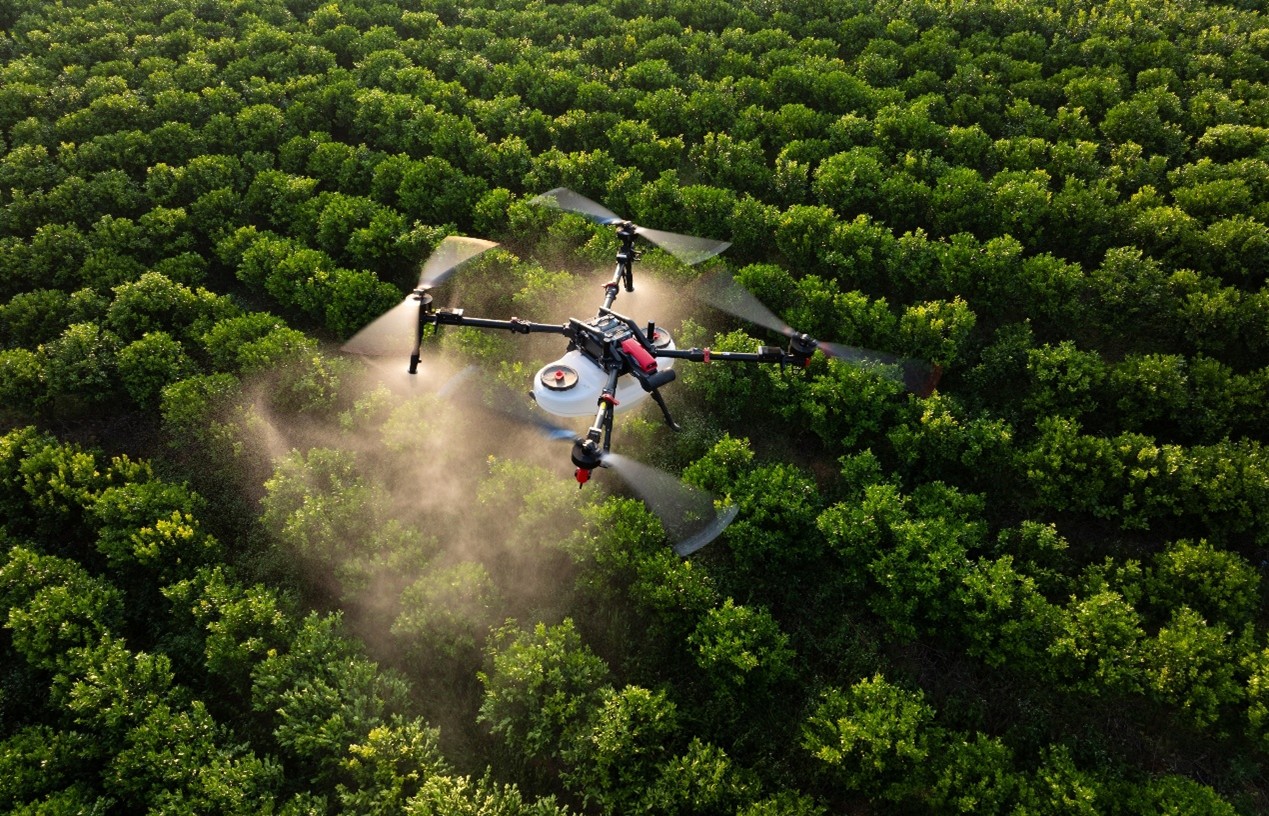
Learn more about the P150 Max
Explore the capabilities and features of XAG’s flagship agricultural drone.
Explore P150 Max

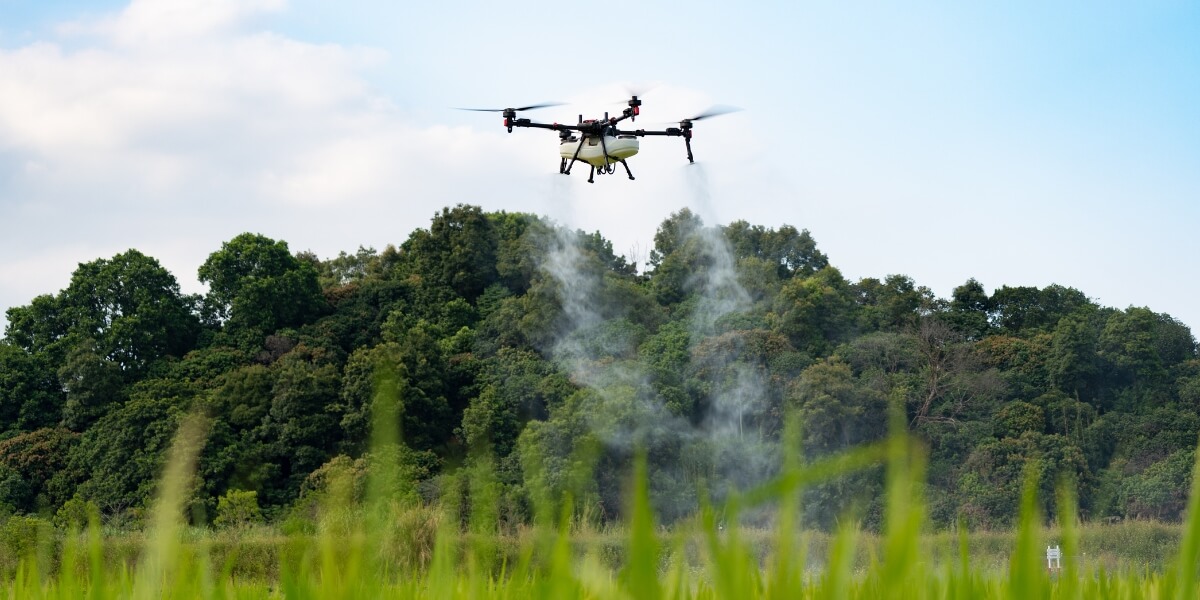
One of the most common questions farmers and agricultural contractors ask when considering an agricultural drone is: How many hectares can it spray per hour?
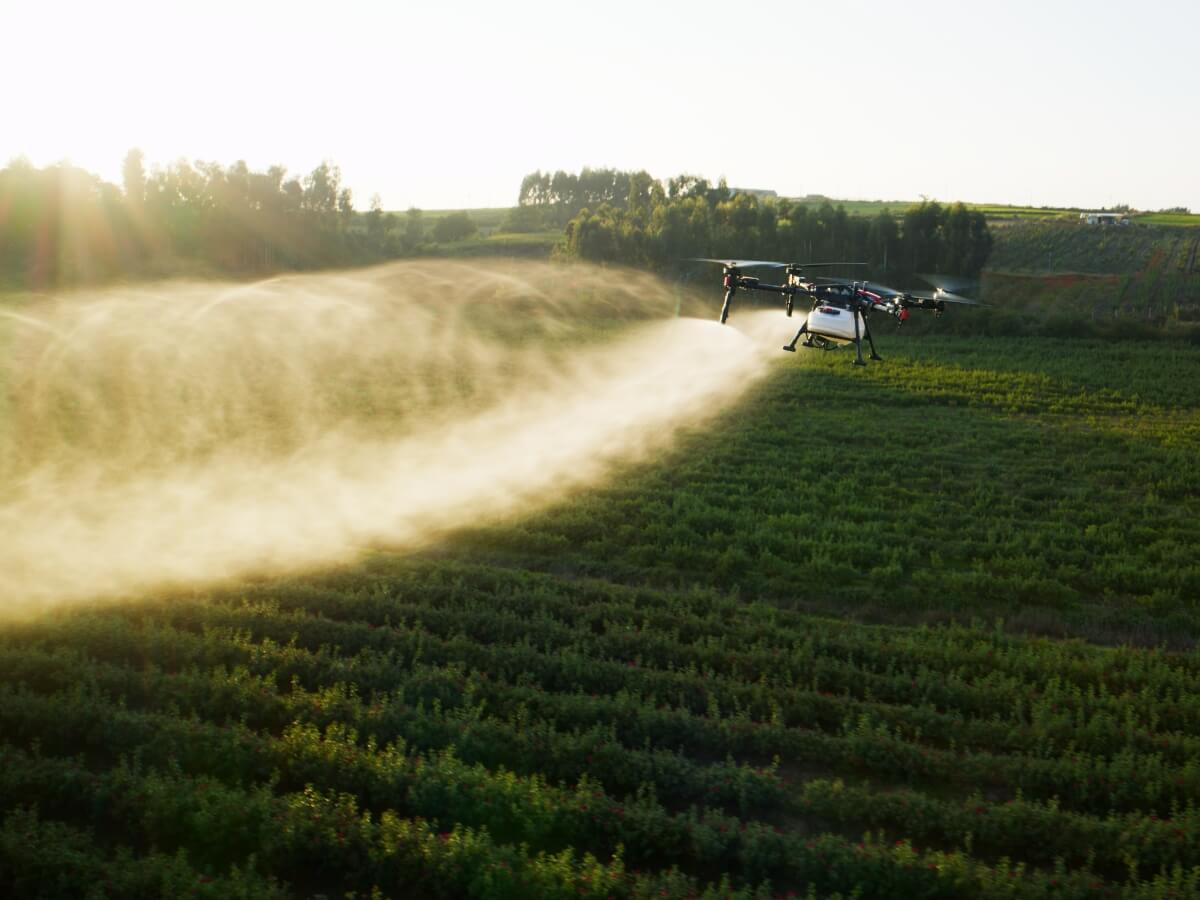
It is an important starting point, but the answer depends on more than maximum flight speed or a single headline specification. Application rate, refill time, battery rotation, field layout and ground support all influence the area that can be completed within each available operating window.
A theoretical hectares-per-hour figure may show what a drone can achieve under specific conditions, but real-world productivity depends on whether that performance can be maintained across the entire job. When planning an application or looking for ways to improve your current setup, consider both the operational and logistical sides of the work:
In agriculture, timing is critical. The amount of work completed depends heavily on the available application window. Even high-output equipment can only operate when factors such as wind speed and direction, temperature, humidity and rain allow products to be applied safely, effectively and in accordance with label requirements and applicable regulations.
A robust, adaptable system gives operators greater flexibility to schedule work around suitable conditions. When high daytime temperatures or winds restrict spraying, this may include shifting operations to cooler, calmer periods in the early morning or evening.
.jpg)
The XAG P150 Max Advantage: Autonomous route execution and advanced 4D imaging radar support operation across a broader range of suitable periods. Because the radar can detect obstacles without relying entirely on ambient light, it supports low-light and night operations where these are legally authorised and appropriate procedures are in place. The aircraft’s IPX6K rating also provides protection against water ingress during normal agricultural use and cleaning.
Higher application rates empty the tank more frequently, directly affecting your number of refill cycles. While tank capacity is important, your workflow will ultimately stall if the time required to prepare, filter, and pump each load cannot keep pace with the drone.
.jpg)
The XAG P150 Max Advantage: The RevoSpray P5 system combines an 80 L liquid tank with a standard maximum flow rate of 32L/min. An optional four-nozzle kit increases the maximum flow rate to 46L/min for suitable high-volume applications. Real-time liquid-level monitoring helps operators plan timely refills and reduce unnecessary interruptions.
Flight time is only one part of each operating cycle. Once the drone lands, the next battery must be ready when refilling is complete. If charging or cooling cannot keep pace with the aircraft, the power system becomes the main bottleneck, heavily reducing your hourly hectare rate.
Reliable field power is therefore essential. Operators should consider charger input requirements, generator or storage capacity, battery rotation and cooling.
.jpg)
The XAG P150 Max Advantage: The B141050 Smart Battery works seamlessly with XAG’s high-capacity charging options, including a 6,800W Parallel Charging Kit. When using two chargers in parallel, this smart super-charge battery can be refilled in just 7 minutes. Combined with the Battery Cooling Tower for rapid thermal management, this setup is engineered to help maintain 6–8 hours of continuous, high-tempo field operation. Furthermore, the battery is designed for longevity with a lifespan of up to 1,500 cycles, lowering your long-term running costs and delivering exceptional return on investment.
Maintaining a high work rate depends on the complete cycle: returning from the route, landing, changing the battery, refilling or reloading, and resuming the operation. The location of the loading point also affects how much time and battery capacity are consumed in transit.
For spreading applications, the loading method is particularly important. Repeatedly transferring seed or fertiliser with small buckets may create avoidable delays and increase physical handling on larger jobs. A well-organised loading station can be as important as the spreading container itself.
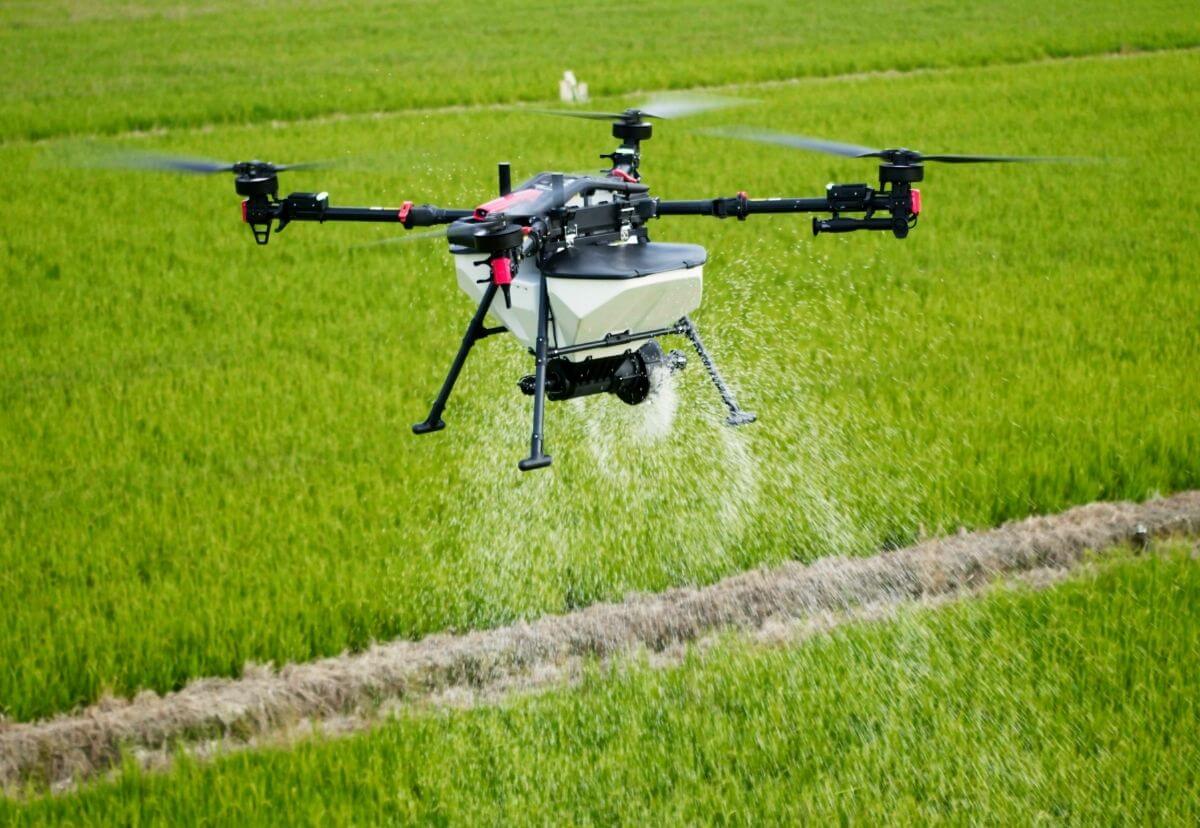
The XAG P150 Max Advantage: The RevoCast P5 system features a 115L granule container, an 80kg maximum payload and a maximum spread rate of up to 300kg/min under specified conditions. Dual-side feeding supports smooth material discharge, while interchangeable screw feeders accommodate materials ranging from fine seeds to coarse fertilisers up to 10mm.
Large, open paddocks generally allow longer and more efficient application runs that get closer to theoretical maximums. Small or irregular fields with trees, dams, power lines and other obstacles require more planning, route adjustments and repositioning.
Jobs involving multiple separated blocks or spot applications introduce another consideration: transit speed and application speed are not necessarily the same. The drone may travel more quickly between treatment areas but operate at a different speed while spraying or spreading to achieve the required application rate and coverage.
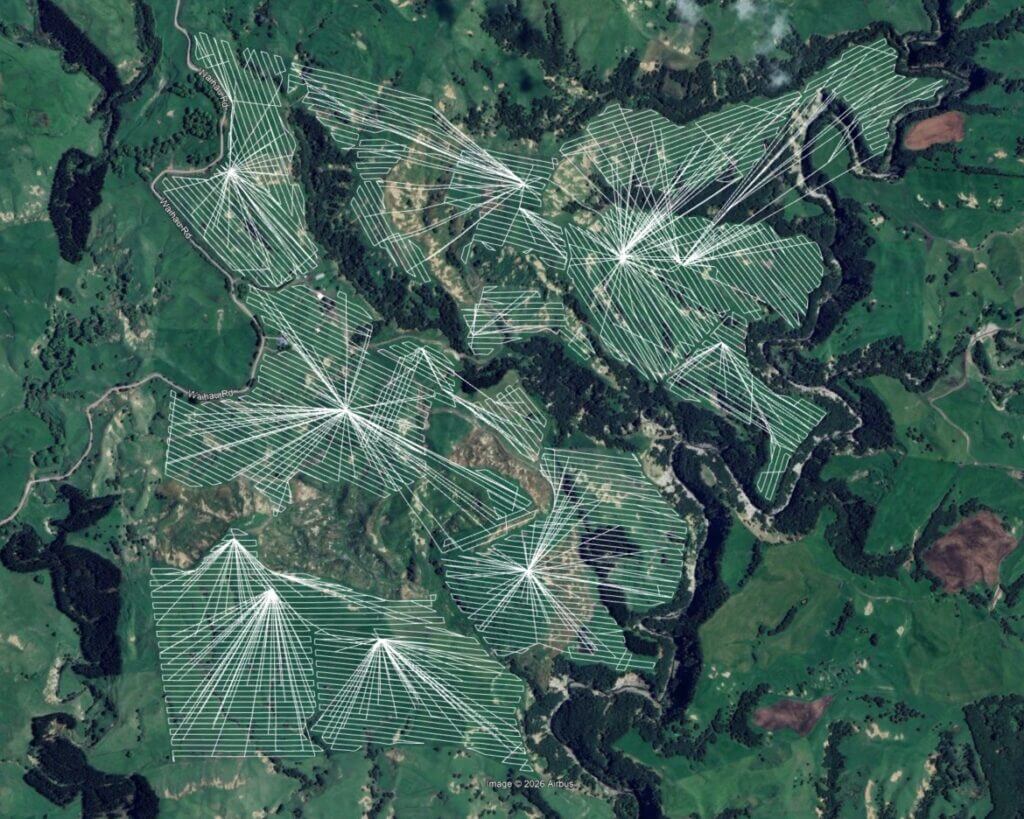
The XAG P150 Max Advantage: Multi-Field Operation allows operators to plan continuous missions across up to 10 fields, with customised parameters for different field sizes, shapes and application requirements. Intelligent route planning, pause-and-resume functionality and automatic return when liquid or battery levels are low help maintain workflow continuity.
To get the most from your agricultural drone, you need an equally efficient ground setup. An appropriately sized mixing tank allows enough spray mixture to be prepared for upcoming loads, reducing delays between flights.
Pump and hose capacity can also make a substantial difference. Refilling an 80 L tank in 30 seconds creates a very different workflow from waiting three minutes for every refill. Over a full day, the time spent mixing, pumping and refilling can have a significant impact on overall productivity.
The XAG P150 Max Advantage: The P150 Max features an 80 L Smart Liquid Tank with accurate, real-time liquid-level monitoring. Paired with a well-designed mixing and high-flow refilling setup, it supports predictable turnaround cycles and helps operators keep the aircraft working efficiently between loads.
Automation reduces manual flying, but real-world productivity still depends on efficient ground logistics. For solo contractors, every minute spent loading, charging or moving equipment affects daily output. Achieving greater scale requires equipment that is practical to deploy, supported by the right training and licences for compliant operations.
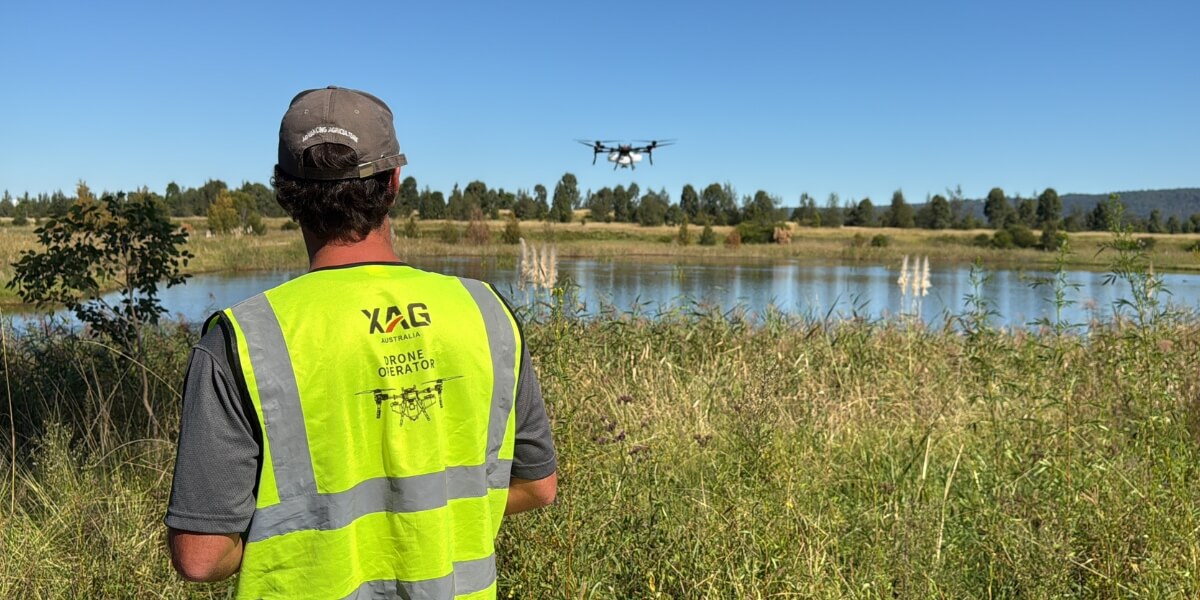
The XAG P150 Max Advantage: The P150 Max pairs serious commercial capability with a solo-friendly workflow. Its manageable 32 kg empty weight makes transport and field setup more practical, while its 80 kg payload supports demanding jobs. Autonomous route execution reduces manual flying workload, allowing one operator to coordinate ground logistics while maintaining appropriate supervision of the aircraft.
The XAG Training Advantage: Hardware is only half the equation. To make the licensing process completely hassle-free for our customers, XAG Australia has partnered with ACE Aviation, a CASA-approved training organisation. Together, we support you with manufacturer training, RePL, aircraft-specific endorsements, and ReOC pathways, ensuring aviation regulations never become a barrier, whether you are bringing applications in-house on the farm or growing a commercial contracting service.
Spraying, spreading, mapping and field logistics each involve different workflows. Spraying productivity depends heavily on water access, mixing and pumping capacity, whereas spreading depends on material characteristics and loading speed. Mapping involves different flight parameters, while logistics work depends on payload, route and loading arrangements.
Contractors must also account for time spent travelling between properties, assessing sites, cleaning equipment and changing products or task systems. These activities may not appear in a theoretical hectares-per-hour figure, but they contribute directly to daily output and profitability.
.jpg)
The XAG P150 Max Advantage: Its modular platform supports spraying, spreading, mapping and lifting. The RevoSpray P5, RevoCast P5 and RevoSling systems allow the aircraft to support different agricultural tasks, helping farmers and contractors gain more value from a single platform without needing separate, specialised machinery for every job.
Even the best-planned operation can be derailed by blocked filters, damaged nozzles, or routine servicing. Preventive maintenance and a well-stocked field kit are just as vital to daily output as flight speed.
.jpg)
Genuine productivity means having a high-performance machine that delivers safely, accurately, and consistently. Backed by XAG Australia's local support network, the P150 Max is a serious agricultural tool built to keep your workflow moving, day and night.
Whether you want to bring spraying and spreading in-house or expand your professional contracting service, the XAG P150 Max delivers the capacity, versatility and autonomous capability needed for serious agricultural work.